Why .NET is the Gold Standard for Scalable Enterprise Applications in 2026

Samuel .NET Developer
Updated Jun 19, 2026
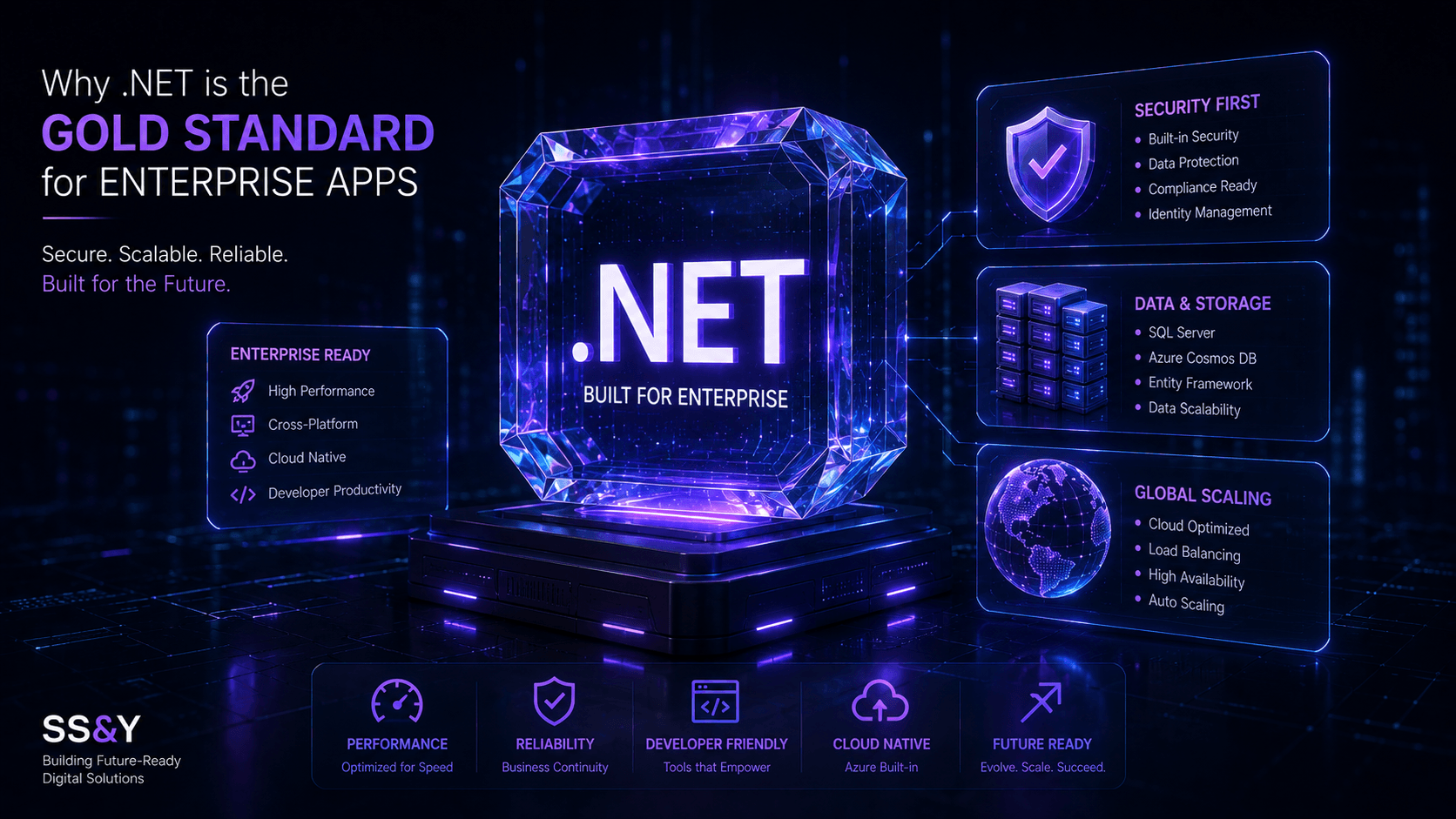
In the fast evolving digital landscape, choosing the right technology stack for your enterprise is more than just a technical decision it’s a strategic business move. While many frameworks come and go, .NET (specifically ASP.NET Core) continues to reign as the gold standard for large-scale, mission-critical applications.
The Need for Enterprise Stability
Modern businesses deal with massive data, thousands of concurrent users, and complex security requirements. You don't just need a website you need an ecosystem that doesn't break under pressure. This is where the .NET ecosystem, backed by Microsoft, provides a "rock solid" foundation that startups and global corporations alike trust.
Why .NET Stands Out in 2024?
- Unmatched Performance: With the release of .NET 8 and 9, the framework has become one of the fastest in the world.
- Security First Architecture: .NET comes with built in protection against threats like SQL injection and XSS.
- True Cross Platform Flexibility: Build high performance applications that run seamlessly on Linux, macOS, and Windows.
- Seamless Cloud Integration: Being part of the Microsoft family, .NET integrates perfectly with Azure for auto scaling.
How SS&Y IT Solution Delivers Excellence
At SS&Y IT Solution, we don’t just write C# code. We follow Clean Architecture and SOLID principles to ensure that the software we build for you is maintainable and ready for future updates. We bridge the gap between complex business logic and a seamless user experience.
Samuel .NET Developer
Founder & CEO of SS&Y IT Solution. A Senior Solution Architect dedicated to building high performance, secure, and scalable enterprise software for global clients.
